
White flannels and Timeless strokes: When cricket was pure - Anish Rao
- Anish Rao
- May 28, 2025
- 4 min read

There’s a certain smell to old cricket books—a mix of leather, sun, and sentiment. As a child, I remember flipping through my father’s dusty cricket almanacs, eyes wide at black-and-white photographs of men in crisp white flannels and gentle smiles. No colored jerseys, no roaring crowds, no flashing stumps—just the game, in its most honest attire. Back then, cricket wasn’t just watched; it was felt. And somewhere in that sepia-toned nostalgia, I found the beauty of what I now call pure cricket.
The Elegance of Restraint
In today’s world of instant sixes and twenty-over thrillers, restraint is underrated. But in the 20th century, it was revered. A forward defensive stroke wasn’t boring—it was beautiful. The ball meeting the middle of the bat, the batsman holding his pose like a sculptor admiring his work—that was art. Watching Rahul Dravid leave a ball outside off stump was, to many, just as
poetic as watching Virat Kohli flick one off his pads.
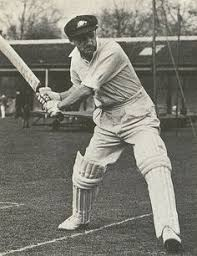
The cricketers of that era weren’t entertainers. They were craftsmen. Each innings was built like a slow-burning novel—deliberate, layered, and worth the wait. Players like Sunil Gavaskar, Sir Viv Richards , and Sir Don Bradman didn’t play for the highlight reels; they played for history.
The Gentleman’s Game in Its Purest Form
What set cricket apart back then was not just how it was played, but how it was lived. There was grace in the way players conducted themselves. You didn’t see over-the-top celebrations or verbal volleys every over. A bowler dismissed a batsman with a nod, not a roar. A batsman, when dismissed, didn’t look at the umpire in disbelief—he walked back, accepting that in cricket, as in life, not everything goes your way.
The game was governed as much by spirit as by rules. Players respected the umpire’s call, acknowledged the crowd’s applause with humility, and shook hands with opponents
regardless of the result. It wasn’t just cricket; it was character.
Of White Flannels and Green Outfields
There was something undeniably poetic about the sight of 22 players in white flannels, scattered across a green field under the wide, open sky. The contrast itself was calming. There were no sponsors crowding the jerseys, no flashy advertisements painted across the boundary ropes. The focus was on the game—the bowler’s run-up, the batsman’s stance, the slip cordon’s crouch.
It was in these small visuals that cricket found its elegance. The cricketers’ whites weren’t just uniforms; they were symbols—of discipline, unity, and a certain timeless dignity.
The Red Ball’s Silent Story
Unlike today’s fleeting white balls, the red ball was a companion that stayed through the day. It swung in the morning, reversed in the evening, and left its mark on the pitch and the players. The shine on one side, the scratches on the other, the way it aged over 80 overs—it told its own story. Bowlers caressed it, captains planned around it, and batsmen feared it.
Spin bowlers would grip it with fingers that had grown familiar with its seams, coaxing it to turn with subtle variations. Fast bowlers would cradle it like a weapon, aiming for that one delivery that would crash through defenses. The red ball was not just part of the game; it was the game.
When Commentary Painted Pictures
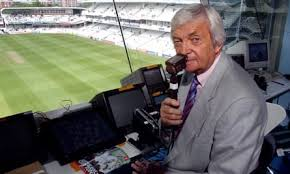
In the pre-television days, cricket lived in the imagination. Radios crackled in homes and tea stalls as voices like Richie Benaud, Tony Cozier, and India's own Vijay Merchant brought matches alive. They didn’t shout; they narrated. Their words were enough to make you feel the tension of a close match, the elegance of a boundary, or the heartbreak of a run-out.
There was no live replay, no slow motion. You believed what you heard, and you built images in your mind. Sometimes, the picture your heart created was more vivid than any screen could offer.
The Icons Who Made Cricket Eternal
The 20th century was a gallery of cricketing legends who defined eras through their technique and temperament. Sir Don Bradman’s unimaginable average of 99.94 remains unmatched. His footwork, precision, and hunger redefined what batting could be.
Closer home, Sunil Gavaskar stood tall against the fiercest pace attacks without a helmet. His mastery of technique and calmness under pressure inspired an entire generation of Indian cricketers. Later, the emergence of Sachin Tendulkar in the 1990s reminded us that you could still play classical cricket and become a global icon.
These players didn’t just win matches; they built legacies.

Test Cricket: The Soul of the Game
In many ways, Test cricket was the most honest form of the sport. Played over five days, it demanded everything from the players—skill, stamina, strategy, and soul. There were draws that felt like wins, and sessions where fortunes swung with every over. It was a psychological battle wrapped in athletic grace.
Each day was a story. The morning swing, the afternoon grind, the twilight turn. It required fans to stay, to feel every run, every wicket, every over. It wasn't just about the result—it was about the journey.
What We’ve Gained… and What We’ve Lost
Modern cricket is spectacular, no doubt. It’s accessible, global, and exciting. T20 leagues have brought financial security and worldwide fame to players. Young fans are engaged, women’s cricket is rising, and technology has made the game fairer.
But in chasing speed and spectacle, we’ve somewhere lost the silence between the deliveries, the poetry in a leave, the charm of a five-day draw. We’ve lost the patient applause after a gritty fifty, the respect for a bowler who bowls ten overs on the trot, the value of grit over glamour.
Cricket has evolved, but like an old friend, we still remember its gentler days—the days when it was pure.
A Quiet Ode
This isn’t a rant against modernity. It’s a love letter to legacy. A tribute to the times when cricket didn’t need fireworks to ignite passion. When the beauty was in the detail, the silence, the waiting.
When the whites were bright, the strokes were timeless, and the game… was pure.


Comments